 remygame.com
How to Master Age of Wonders 4 – The Complete Beginner-to-Advanced Guide
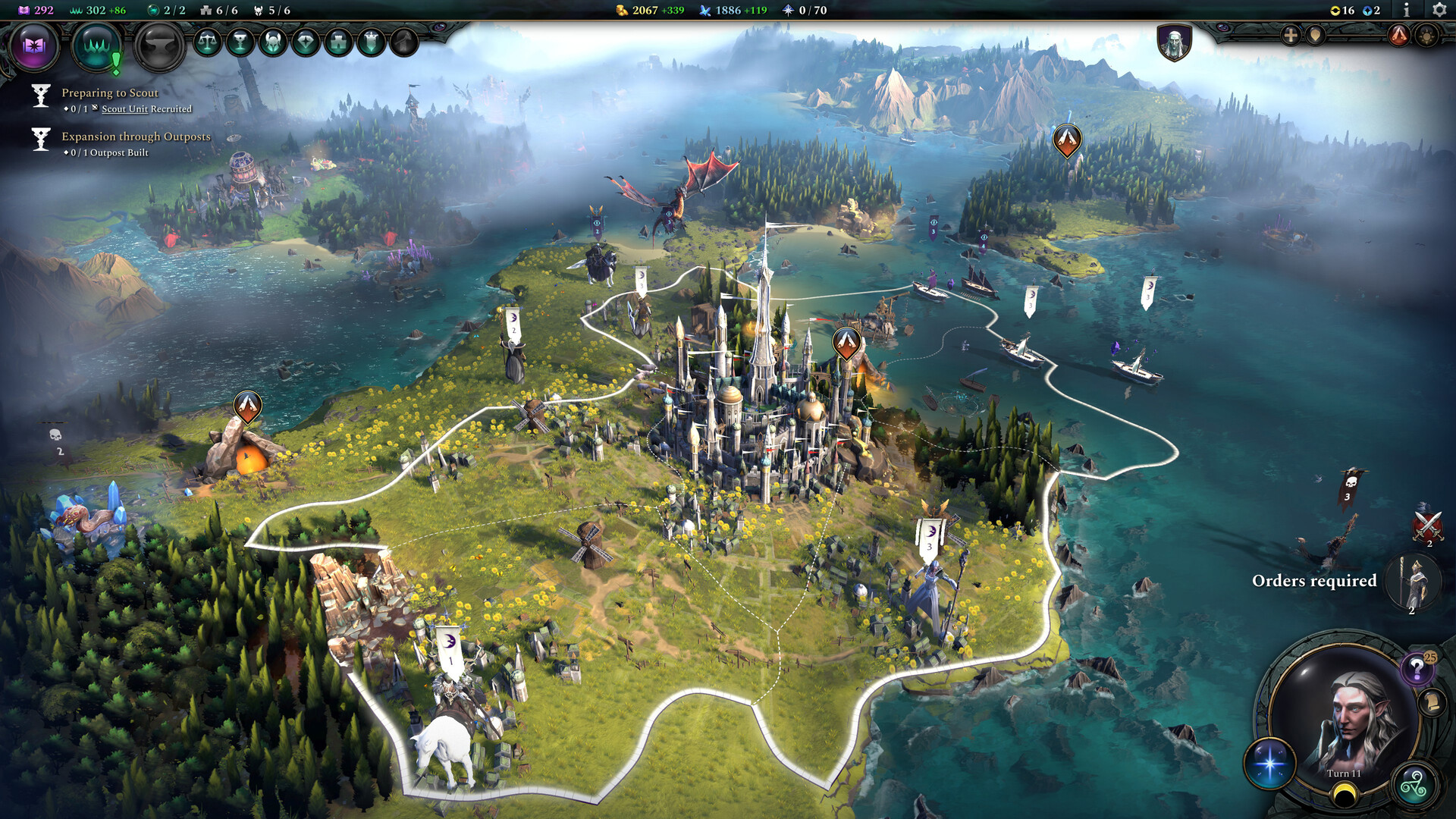
Age of Wonders 4 is a fantasy strategy game that combines empire building, exploration, diplomacy, character development, and turn-based tactical combat. Developed by Triumph Studios, the game places players in control of a ruler seeking to establish dominance over a magical realm. Every decision, from choosing a faction's culture to researching powerful spells, influences how the empire develops and how it performs against rival rulers.
Unlike strategy games built around fixed civilizations, Age of Wonders 4 gives players extensive freedom to create their own factions. You can customize the physical appearance of your people, select their culture and societal traits, choose a starting magical Tome, and gradually transform the faction through research and magical enhancements. A peaceful kingdom focused on diplomacy can eventually become a powerful religious empire, while an aggressive society can embrace destructive magic and conquer neighboring territories.
The game follows the familiar 4X structure: explore the world, expand your territory, exploit available resources, and eliminate or overcome your rivals. However, its tactical battles add another layer of depth. Instead of resolving every conflict through a single numerical calculation, players can directly command armies, position units, exploit terrain, and use abilities to defeat stronger opponents.
Mastering Age of Wonders 4 requires understanding how these systems connect. A powerful army needs a stable economy, a growing empire needs efficient territorial management, and a successful ruler must know when to negotiate and when to fight. This guide explains the essential mechanics and advanced strategies needed to build a successful fantasy empire.

1. Understanding the Core Gameplay and Victory Conditions
Age of Wonders 4 is played across a strategic world map divided into provinces, cities, territories, and locations containing valuable resources. Each turn gives players opportunities to move armies, develop settlements, research magical knowledge, negotiate with other factions, and respond to events. The world continues to evolve as rival rulers expand their influence and pursue their own objectives.
The main gameplay cycle revolves around several interconnected activities:
- Explore: Send scouts and heroes across the map to discover resources, ancient wonders, independent settlements, and enemy territories.
- Expand: Establish new cities, claim provinces, and increase your empire's influence.
- Develop: Improve cities, construct buildings, recruit units, and research magical technologies.
- Interact: Build relationships with Free Cities and rival rulers through diplomacy, agreements, and negotiations.
- Conquer: Defeat hostile armies, capture settlements, and remove threats to your expansion.
There is no single mandatory approach to becoming powerful. Some players prefer military domination, while others build a prosperous empire through alliances and territorial development. Your chosen strategy should match the faction's strengths and the conditions of the realm.
Victory conditions depend on the realm settings and available objectives. Players can pursue military victories by defeating opponents, expansion-oriented victories through territorial control, or magical approaches that require developing powerful structures and fulfilling specific requirements. The exact opportunities available can vary depending on the scenario and game settings.
For beginners, the most important lesson is to avoid treating every turn as an opportunity for expansion or combat. Every action should contribute to a larger plan. Before declaring a war, consider whether your economy can support additional armies. Before founding another city, check whether you can afford its development. A strong empire is built through consistent decisions rather than constant aggression.
2. Creating Your Ruler and Customizing a Faction
Faction creation is one of the defining features of Age of Wonders 4. Instead of selecting only from predetermined civilizations, you can design a people with a combination of physical forms, cultures, societal traits, and magical traditions. These choices influence the faction's starting abilities and create a foundation for its future development.
The physical form determines how your people look. You can create humans, elves, dwarves, orcs, goblins, and other fantasy-inspired populations. Although appearance is important for role-playing, the more significant decisions involve traits that provide practical advantages. Some traits improve combat performance, while others support survival, mobility, economic development, or particular playstyles.
Culture has a major impact on your starting units, city structures, and general approach to warfare. Different cultures specialize in different areas. High cultures can benefit from alignment-related bonuses, Industrious cultures emphasize resilience and defensive strength, and Dark cultures offer a different approach to stability and combat. Other cultures support more aggressive, mobile, or magically focused strategies.
Societal traits provide additional customization. They can strengthen your economy, improve diplomatic opportunities, support expansion, or enhance particular military roles. A faction designed for rapid conquest should prioritize traits that help maintain an effective army. A more peaceful empire may benefit from economic advantages and diplomatic flexibility.
Your starting Tome of Magic is another important choice. It establishes an early magical direction and determines which spells, enchantments, and units become available through research. You do not need to follow a single affinity throughout the entire game. Later research allows you to combine different magical traditions and create a faction with a more specialized identity.
A useful beginner approach is to choose complementary options instead of trying to maximize every possible advantage. For example, a defensive culture paired with traits that improve economic stability can create a reliable foundation. A faction built around aggressive combat should have enough economic support to recruit replacement units and maintain multiple armies.
3. Exploring the Realm and Expanding Your Territory
Exploration is essential during the early stages of a campaign. The world map contains valuable provinces, resource deposits, ancient wonders, hostile creatures, independent settlements, and opportunities for expansion. Discovering these locations early allows you to plan your empire around the resources and strategic positions available.
Your initial scouts and heroes should explore in different directions whenever possible. Scouts are useful for revealing the surrounding terrain, locating points of interest, and identifying potential threats. Heroes can lead armies, investigate dangerous locations, and participate in encounters that may provide rewards or introduce new challenges.
Not every location should be attacked immediately. Some ancient wonders and guarded resource sites contain powerful defenders. Attempting to clear them with an inexperienced army can result in unnecessary casualties. Before engaging, inspect enemy units and compare their strength with your available forces.
Territorial expansion is closely connected to city development. As a city grows in population, it can claim additional provinces around its domain. These provinces provide access to resources and allow you to construct improvements that support the settlement's economy.
When selecting new provinces, consider their long-term value rather than simply choosing the closest available territory. Farms help support population growth, while other improvements can provide production, gold, mana, or specialized benefits. Strategic locations near valuable resources may be more useful than ordinary provinces.
Outposts offer another way to establish a presence beyond your existing cities. They can help secure important locations, extend territorial influence, and prepare areas for future development. However, spreading your influence too quickly can place pressure on your economy and expose isolated settlements to enemy attacks.
A balanced expansion strategy should prioritize valuable land, maintain manageable distances between cities, and avoid creating unnecessary defensive problems. The objective is to build a connected and productive empire that can support future military and economic growth.
4. Managing Cities, Resources, and Economic Growth
A successful empire depends on an economy capable of supporting construction, research, recruitment, and magical development. Age of Wonders 4 uses several resources, each serving a different purpose. Understanding how they work is essential because poor economic management can limit even the strongest military strategy.
The main resources include:
- Food: Supports population growth in individual cities.
- Production: Determines how quickly cities construct buildings.
- Draft: Supports unit recruitment and military replacement.
- Gold: Pays for buildings, units, and various economic or diplomatic actions.
- Mana: Fuels spells, magical abilities, and certain summoned units.
- Knowledge: Allows you to research spells, units, and upgrades from Tomes of Magic.
- Imperium: Supports empire-wide development, including Empire Skills and city expansion.
Food, Production, and Draft are associated with individual cities, while Gold, Mana, Knowledge, and Imperium contribute to your empire's global resource pools. This distinction matters when planning development because a city may have strong local production but still depend on the wider empire for other resources.
City development should reflect the role you want each settlement to perform. One city might focus on food and population growth, while another specializes in production and recruitment. A settlement surrounded by useful magical resources can become an important source of Mana or support your research strategy.
Buildings provide recurring benefits and help cities become more productive over time. Since construction and unit recruitment use separate queues, you can develop infrastructure while producing military forces. This makes it easier to recover from battles without completely stopping economic progress.
Imperium deserves particular attention because it influences development beyond individual cities. Empire Skills can provide broad advantages, while additional cities and other expansion options require careful investment. Spending Imperium without considering future needs may slow down your ability to grow the empire.
As your economy becomes stronger, avoid investing everything in a single resource. An army-heavy strategy still needs Gold and Draft, while a magic-focused empire requires enough Mana and Knowledge to maintain its research and spellcasting plans. A healthy economy gives you the flexibility to respond to unexpected wars, territorial opportunities, and diplomatic changes.

5. Researching Tomes of Magic and Developing Your Empire
Tomes of Magic replace the traditional fixed technology tree with a flexible research system. Each Tome contains a collection of spells, unit unlocks, enchantments, and upgrades built around a particular magical theme. Researching these Tomes allows your faction to evolve throughout the campaign rather than remaining restricted to its original design.
The game organizes magical development around six affinities:
- Order: Emphasizes diplomacy, faith, healing, and structured imperial development.
- Chaos: Supports aggressive warfare, destruction, and rapid conquest.
- Astral: Focuses on magical power, spellcasting, and advanced arcane abilities.
- Materium: Emphasizes physical strength, material resources, and defensive development.
- Nature: Supports growth, living creatures, environmental powers, and biological transformations.
- Shadow: Focuses on darker magic, manipulation, cold, and death-related abilities.
Each affinity offers a different strategic direction. However, these categories are not strict restrictions. You can combine Tomes from multiple affinities to create unusual combinations and respond to the challenges of your current realm.
For example, a faction that begins with defensive Materium magic can later research Nature to improve its relationship with living creatures and environmental forces. An empire built around Order can incorporate Astral magic to strengthen its magical capabilities. Combining different traditions can produce more flexible armies and a wider selection of strategic tools.
When selecting a Tome, examine its complete contents instead of choosing based only on its name or theme. Some Tomes provide powerful units, while others focus on empire enchantments, tactical spells, or economic benefits. A Tome that appears less impressive in combat may still offer valuable improvements to your entire faction.
You should also consider the units you already use. If your armies rely heavily on physical attackers, enchantments that improve their damage or survivability may provide more immediate value than unlocking an entirely different unit type.
The best research strategy is not necessarily to unlock the highest-tier magic as quickly as possible. Instead, build a coherent progression that supports your current military composition, economy, and long-term objectives. A balanced selection of Tomes gives your empire more options when the political and military situation changes.
6. Building Strong Armies and Understanding Unit Roles
Military strength is determined by more than the number of units in an army. Each unit has a specific role, strengths, weaknesses, and abilities that influence how it performs in battle. Understanding these roles allows you to create armies that can deal damage, withstand attacks, and support one another.
Common unit roles include:
- Frontline fighters: Engage enemies directly and protect more vulnerable units.
- Shield units: Absorb damage and help maintain a defensive formation.
- Ranged attackers: Deal damage from a distance while avoiding direct confrontation.
- Support units: Provide healing, protection, and other useful effects.
- Battle mages: Use magical attacks and abilities to damage or weaken enemies.
- Cavalry and mobile units: Exploit movement advantages and threaten exposed targets.
A good army should have a clear structure. Placing several fragile ranged units together without sufficient protection can make them easy targets. Similarly, relying entirely on heavily armored units may leave you without enough damage to defeat enemies efficiently.
Heroes are especially important because they can lead armies, gain experience, and develop powerful abilities. Their equipment and skill choices can support different roles, including frontline combat, ranged damage, spellcasting, and leadership. As heroes become stronger, they can turn an ordinary army into a much more effective force.
Recruitment should be connected to your economy. A large army requires continuous investment in Draft and Gold, and replacing lost units can become expensive during prolonged conflicts. Maintaining several balanced armies is often more useful than building one oversized force that cannot respond to threats in different regions.
Unit enchantments also deserve attention. These magical improvements can strengthen eligible units across your empire, allowing existing forces to remain effective as the campaign progresses. However, enchantments consume resources and should be selected according to your actual military composition.
Before recruiting a new unit, ask whether it fills a weakness in your existing army. Adding another frontline fighter may not help if your forces lack ranged damage or healing. Strong army composition comes from combining complementary roles rather than collecting the most expensive units available.
7. Mastering Tactical Combat, Morale, and Battlefield Positioning
Combat in Age of Wonders 4 takes place on separate tactical battlefields where players directly control their units. Battles are turn-based, giving you time to evaluate enemy positions, choose abilities, and coordinate attacks. A carefully planned engagement can allow a smaller army to defeat a stronger opponent.
Positioning is one of the most important tactical considerations. Units should be arranged according to their roles, with durable fighters protecting fragile attackers and support units positioned where they can assist multiple allies. Ranged units need clear lines of attack, while melee units should avoid moving into dangerous positions without support.
Flanking can significantly improve the effectiveness of attacks. Approaching enemies from the sides or rear creates opportunities to deal additional damage and disrupt their formation. Mobile units are particularly useful for reaching exposed targets, but they should not become isolated after attacking.
Action points and abilities must also be managed carefully. Some units can perform multiple actions under specific conditions, while others have abilities that require setup or positioning. Moving too far before attacking may leave a unit unable to use its strongest ability effectively. Understanding these limitations helps prevent wasted turns.
Morale adds another layer to battlefield management. Units can become less effective when morale deteriorates, and sufficiently low morale can cause them to rout. This means combat is not only about reducing health. Concentrating attacks, applying pressure, and eliminating vulnerable targets can weaken the enemy formation even before every unit is defeated.
Magic can change the outcome of a battle. Offensive spells can damage groups of enemies, while defensive abilities protect important units or improve their combat performance. Summoning spells can also create additional battlefield pressure, forcing opponents to divide their attention.
Terrain should never be ignored. Narrow passages, obstacles, and elevated positions can influence movement and attack opportunities. Before committing to a fight, inspect the battlefield and consider how the environment affects both armies.
For difficult encounters, manual combat is often worth the additional time. Automatic resolution can be convenient for battles that are clearly in your favor, but it may produce losses that could have been avoided through better positioning and ability management.
8. Diplomacy, Free Cities, and Building Political Influence
Military conquest is only one way to expand an empire. Diplomacy allows players to develop relationships with rival rulers, negotiate agreements, establish alliances, and gain influence without fighting every opponent. A strong diplomatic position can reduce the number of threats you face and free up resources for economic development.
Free Cities are independent settlements that can become valuable partners. They may control useful territory, possess access to rare resources, or provide additional military support. Instead of attacking every Free City, consider whether peaceful integration would benefit your empire more than direct conquest.
Whispering Stones help establish diplomatic communication with Free Cities. By assigning these stones, you can improve relations and work toward bringing independent settlements under your influence. Their loyalty and political situation may change over time, so maintaining relationships requires attention.
Diplomacy with rival rulers is more complicated. Other factions have their own goals, personalities, and opinions about your actions. Aggressive expansion near their territory, attacks on their allies, and conflicting interests can create grievances. On the other hand, agreements and shared interests may create opportunities for cooperation.
Useful diplomatic arrangements can include non-aggression agreements, alliances, and other forms of cooperation depending on the current relationship and available options. These agreements can provide breathing room while you develop your cities or prepare for a difficult military campaign.
However, diplomacy should support your broader strategy rather than replace it completely. A peaceful agreement with a powerful neighbor is valuable only if you can respond when circumstances change. Keep enough military strength to protect your borders and discourage opportunistic attacks.
Order-oriented factions may find diplomatic expansion particularly effective, while aggressive Chaos-focused empires may prefer conquest and military pressure. Neither approach is universally superior. The best diplomatic strategy depends on the geography, neighboring rulers, and the resources available in your realm.

9. Advanced Strategies for Warfare, Sieges, and Late-Game Expansion
As your empire grows, the challenges become more complex. Rival factions may control multiple cities, maintain several armies, and possess advanced magical abilities. Winning late-game conflicts requires preparation across economic, military, and diplomatic systems.
One of the most important advanced skills is coordinating multiple armies. Sending a single force deep into enemy territory can leave it exposed to reinforcements or counterattacks. Instead, organize your forces so that they can support one another, protect captured locations, and respond to enemy movements.
Sieges require additional planning. Attacking a fortified city without preparation can lead to heavy losses. Evaluate its defenses, the strength of the defending army, and the available siege options before committing to an assault. A successful siege should weaken the defender's position while preserving enough of your army to win the final battle.
You should also pay attention to strategic targets. Capturing a city that controls important resources or occupies a key route can be more valuable than defeating an isolated enemy army. A well-selected target can disrupt the opponent's economy and make further expansion easier.
Late-game magic creates opportunities for more specialized strategies. High-tier Tomes can unlock powerful spells, transformations, and units that change how armies operate. However, these abilities are most effective when supported by a stable economy and an army composition designed to take advantage of them.
The world map also offers opportunities beyond direct warfare. Ancient wonders, special locations, and independent factions can provide useful rewards or strategic benefits. Securing these locations may strengthen your empire without requiring a full-scale invasion.
In the current game environment, water and trade are also worth considering. The Manta Update improves water gameplay and introduces Trade Routes connecting cities with Outposts, Free Cities, and other empires. These routes can provide economic benefits, but they also create targets that opponents may raid during wartime. The Silver Seas expansion adds further maritime possibilities, including ocean-based cities and the Mercantile culture.
A strong late-game ruler should constantly evaluate whether expansion is worth its cost. Capturing more territory is useful only when you can defend it, develop it, and turn it into a meaningful advantage. Sometimes strengthening existing cities and improving your armies is more valuable than starting another war.
10. Common Beginner Mistakes and How to Improve Your Strategy
Age of Wonders 4 offers many interconnected systems, and beginners can easily become overwhelmed by the number of available choices. Recognizing common mistakes early makes the learning process much easier and helps prevent avoidable setbacks.
Expanding too quickly is one of the most frequent problems. More territory creates additional opportunities, but every city requires resources and protection. If your economy cannot support new settlements, rapid expansion may leave your empire weak despite its large borders. Focus on valuable locations and develop your existing cities before spreading too far.
Ignoring exploration can also create problems. Players who remain close to their starting city may miss important resources, strategic locations, and potential diplomatic partners. Use scouts and heroes to reveal the map early, but avoid sending valuable units into encounters they cannot survive.
Building armies without a clear composition is another common mistake. A force containing only melee fighters may struggle against enemies that use ranged attacks or magic. A balanced army should include units that protect one another and cover different tactical situations.
Researching without a plan can waste valuable Knowledge. Choosing Tomes simply because they unlock interesting abilities may result in a collection of units and spells that do not work well together. Think about your faction's intended direction and prioritize research that improves its existing strengths.
Neglecting city development makes long campaigns harder. An empire that spends every resource on military recruitment may eventually fall behind in production, research, and infrastructure. Keep improving cities while maintaining enough forces to defend your territory.
Fighting every opponent is rarely efficient. Some battles provide important rewards, but unnecessary wars can drain your resources and create multiple enemies. Use diplomacy when it offers a better outcome, and choose military targets carefully.
To improve, review the results of every major decision. If an army loses a battle, examine its composition and positioning instead of assuming that you simply need more units. If a city develops too slowly, identify which resource is limiting its progress. If diplomacy fails, consider whether your previous actions created grievances or damaged trust.
The most effective players learn to connect every system. Exploration reveals opportunities, economic development makes expansion sustainable, research improves military capabilities, and diplomacy determines how much pressure your empire faces. Once these elements work together, even a difficult realm becomes much easier to control.
Conclusion
Age of Wonders 4 offers a deep strategy experience built around customization, empire management, magical progression, diplomacy, and tactical warfare. Its greatest strength is the freedom to create a faction and guide its development through meaningful decisions. Every campaign can follow a different path, whether you build a peaceful trading empire, command a disciplined military kingdom, or transform your people through powerful magical traditions.
For beginners, the best approach is to understand the economy, explore the surrounding realm, and build a balanced faction before pursuing aggressive expansion. As your knowledge improves, you can experiment with different cultures, combine magical affinities, develop specialized armies, and use diplomacy to control the political landscape.
Mastering the game is not simply about possessing the largest army or the most territory. It is about making every part of your empire work toward a shared objective. With careful planning, effective battlefield decisions, and a clear long-term strategy, you can turn a small settlement into a powerful realm capable of shaping the fate of the entire world.